Palanaeum
The Way of KingsThe Palanaeum is the vast archive of Kharbranth, a monumental storehouse of books, manuscripts, and scrolls whose importance extends beyond scholarship. Its extraordinary scale makes knowledge a commodity that sustains the city’s hospitals, while its surviving texts preserve partial memories of ancient places, peoples, and catastrophes. For Shallan Davar, entering it transforms abstract longing for learning into an overwhelming physical experience: the archive becomes a space large enough to dwarf the individual and deep enough to suggest that Roshar’s history remains only partly recovered.
Architecture and First Impression
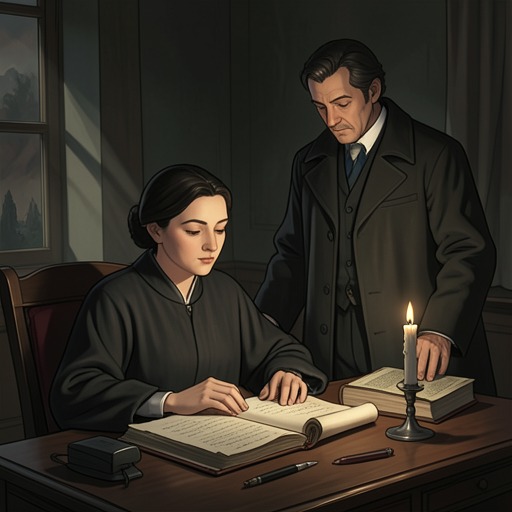
Beyond a pair of grand steel doors carved with geometric circles, lines, and glyphs, the Palanaeum opens into a breathtaking chamber. Smooth rock walls rise beyond the reach of the dim illumination, with distant flickers of light suggesting a height that cannot easily be measured. Dozens of small balconies are set into the walls like private theater boxes, many glowing softly, while the dominant sounds are turning pages and faint whispers. The design makes readers appear small within an environment organized around the accumulation and circulation of thought.
The entrance also establishes the archive as more than a practical library. The doors bear a chart divided across their two halves, but Shallan has no time to study it before passing through. That interrupted act of reading anticipates the Palanaeum’s larger effect: its contents invite endless attention, yet the immediate pressures of family, money, and political danger repeatedly pull Shallan away from complete understanding.
Scale, Collection, and Civic Economy
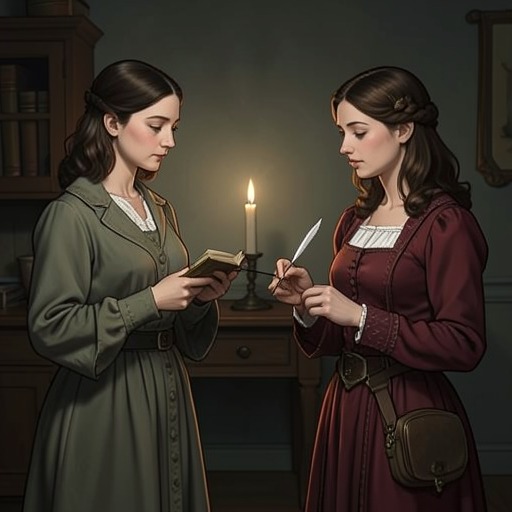
The Palanaeum possesses the finest collection of tomes and scrolls on Roshar, exceeding even the Holy Enclave in Valath. Its holdings number more than seven hundred thousand separate texts. This figure overwhelms Shallan because her father owned exactly eighty-seven books, all of which she had read several times. The contrast turns the archive’s numerical scale into a measure of intellectual possibility: what she has known as an entire world of reading is revealed to be only a minute fragment of what exists.
The collection also has a direct economic function. Kharbranth’s hospitals require extensive upkeep, and the city has few distinctive exports beyond fish, bells, and information. The Palanaeum supplies the third and most valuable of these commodities. Knowledge is therefore not secluded from public life; the archive helps finance the city’s medical institutions, binding preservation, scholarship, and civic care into the same system.
A Subterranean World of Learning
When Shallan Davar later walks into the Palanaeum proper, beyond the study areas of the Veil, its beauty and scope can distract her from everything else. The archive is shaped like an inverted pyramid carved down into the rock. Balcony walkways hang around its perimeter, descending gently along all four walls in a majestic square spiral toward the center of Roshar. Lifts provide a faster route downward, but the spiral remains the defining visual and spatial principle.
From the railing at the top level, Shallan can see only halfway to the bottom. The apparent impossibility of the construction leads her to wonder whether Soulcasters were used to create the open spaces and how many gemstones such work would have required. The questions preserve the archive’s mystery even as they describe its engineering. It is a human-made place that seems too immense to have been shaped by human hands, a built environment whose order inspires both technical speculation and awe.
History Preserved in Fragments
The Palanaeum’s value is inseparable from the incompleteness of the history it preserves. Jasnah Kholin explains that Urithiru, once the center of the Silver Kingdoms and a city said to hold ten thrones, has been abandoned since before the Lost Radiants turned against mankind. Most scholars regard it as a myth. The ardents avoid discussing it because of its association with the Radiants and with the first major failure of Vorinism, leaving much of the city’s history dependent on fragments quoted by classical scholars.
Even those classical works have often survived only in pieces. The Way of Kings is identified as the single complete work from the early years, preserved through the efforts of the Vanrial. In this context, the Palanaeum is not simply a place where the past is stored intact. It is a structure filled with remnants, copied passages, partial works, and absences. Its enormous collection offers the possibility of recovery while continually demonstrating how much has already been lost.
Crossroads of Information
The archive’s reach reflects Kharbranth’s position as a center of information and exchange. Elsewhere, accounts of Roshar’s cities describe distinctive systems of construction, trade, law, and worship that belong to the wider network of knowledge the Palanaeum gathers. Sesemalex Dar is built in giant troughs whose raised lips and drainage cracks protect it from highstorms and flooding; its crem pottery and lenient treatment of foreign visitors make it a regional waypoint. Purelake, meanwhile, is a shallow, transparent body of water extending hundreds of miles, with fish, colorful cremlings, and eel-like riverspren supporting local life and trade.
The archive’s cosmopolitan function is also visible in the movement of people through Kharbranth. Szeth-son-son-Vallano arrives at its docks carrying a sack of grain as a porter, keeping his eyes lowered while passing through the city’s crowded, steep streets. Such a scene places the Palanaeum within a living urban system rather than outside it: scholars, merchants, laborers, and dangerous travelers all enter the City of Bells, while information moves among them in forms ranging from books and copied fragments to rumor and political intelligence.
The Palanaeum thus joins the intimate scale of a reader’s desire to the planetary scale of Roshar’s endangered memory. Its balconies, spiral descent, and seven hundred thousand texts promise a route toward mastery, yet the incomplete record of Urithiru and the lost works cited within the archive impose a limit that no amount of reading can remove. The place is both a sanctuary for knowledge and a monument to its vulnerability.